





Do you need approval to extend your house in Brunei?
Most extensions need approval before work starts. Here's what that means, who applies, and what to check if your house is under the National Housing Scheme.
This is a general guide based on published government information. Rules can change, so confirm what your project needs with ABCi or a registered architect or engineer before you start.
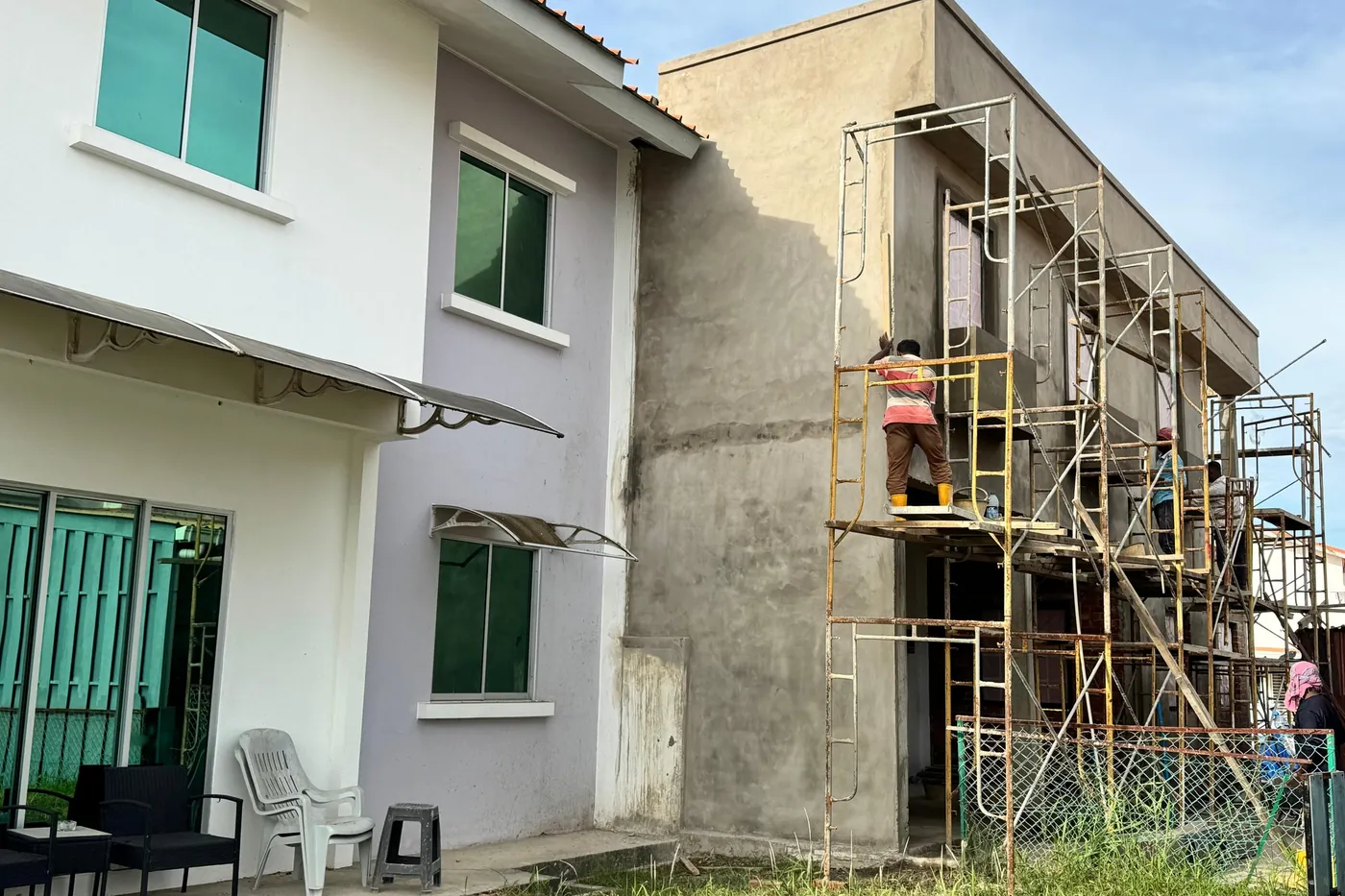
Extending your house is often the best way to get more space without moving. Before you build, though, you need to know whether the work needs approval. Skipping it can be costly: the Minister of Development has said that unsafe extensions built without approval can be ordered to be demolished.
Which works need approval?
Building work in Brunei is controlled by the Building Control Order 2014 and the Building Control Regulations 2014, administered by the Authority for Building Control and Construction Industry (ABCi). Most building works need approval before they start. Putting up a new structure, extending a building, demolishing part of one and altering its structure all count.
Some small works are treated as insignificant and don't need approval. Published examples include replacing windows and doors, air-conditioning works, and partition walls inside a bungalow, semi-detached, terrace or linked house. In practice, a room extension, an upper floor, a kitchen extension or a car porch attached to the house should be treated as needing approval, unless a qualified professional tells you otherwise.
Who applies?
Only a Qualified Person (QP) can apply for approval of building plans. A QP is an architect or professional engineer registered with the Board of Architects, Professional Engineers and Quantity Surveyors (BAPEQS) who holds a valid practising certificate. Applications go to ABCi through the OneBiz online system. The usual steps are:
- You appoint a QP, who designs the extension and prepares the drawings.
- If the use of the land or building is changing, planning permission from the Department of Town and Country Planning may also be needed.
- Your QP applies to ABCi for development approval.
- Before work starts, the QP applies for the permit to start work. The builder signs an undertaking to follow the Building Control Order, and the contractor's registration must stay valid for the whole job.
- When the work is finished, an occupation permit may be needed before the new space is used.
Houses under the National Housing Scheme
If your house is under the National Housing Scheme, such as an RPN or STKRJ house, you also need approval from the Ministry of Development before extending or renovating. In 2019 the Minister of Development told the Legislative Council that more than 18,000 homeowners had made extensions or renovations without approval, and that unsafe ones could be ordered to be demolished.
What if a builder ignores the approved plans?
ABCi has been tightening enforcement. In August 2025 the Minister of Development told the Legislative Council that builders must carry out work according to the plans approved by ABCi. ABCi announced warning notices for breaches from September 2025, followed by compound fines, suspension or prosecution if breaches continue. Companies issued with notices are to be listed on the ABCi website.
How we can help
We build extensions to the drawings approved for your house and work alongside your architect or engineer from start to finish. At the site visit, we'll talk you through what your extension involves. Our builder's licence and contractor registration with ABCi are valid, and you can check them yourself.
Sources
- FAQs: Building Control Order 2014, business.gov.bn
- Building or renovating commercial premises, business.gov.bn
- What construction permits do you need?, BizBrunei, February 2018
- Unsanctioned, unsafe renovations to national scheme houses could face demolition, The Scoop, 20 March 2019
- Legislative Council oral question PL222, 5 August 2025, Hansard archive


